Showing posts with label Time. Show all posts

Thursday, 9 December 2010

Li, Dynamic Form in Nature 리, 자연의 동적 양식

An earlier post titled 'Movement in x,y, and z' the drawings illustrated the informal layout of Seoul's streets, stairs and paths in its low rise areas. This has led me to look at forms that occur in nature. A book in the wooden series called 'Li, Dynamic Form in Nature' by David Wade, has been a favorite of mine for a long time. Li a Chinese notion of 'pattern' and 'principle' is used describe universal formations. Many of the drawings show naturally occurring networks and patterns in flora and fauna. Some of these forms resemble the street layouts studied, this has led me to reassess the plan layout and flow of the promenade. The inspiring maps of the complexity of our natural world are shown in this post. I'm interested in how informal natural patterns can contrast the formal layout of the complex. Looking at microscopic forms allows scale changes to be envisioned and contemplated. Arteries and branches become streets and paths. They all have a clear function, as a movement supporting structure. The promenade is the structure to allow flow and movement through the barriers and boundaries highlighted.
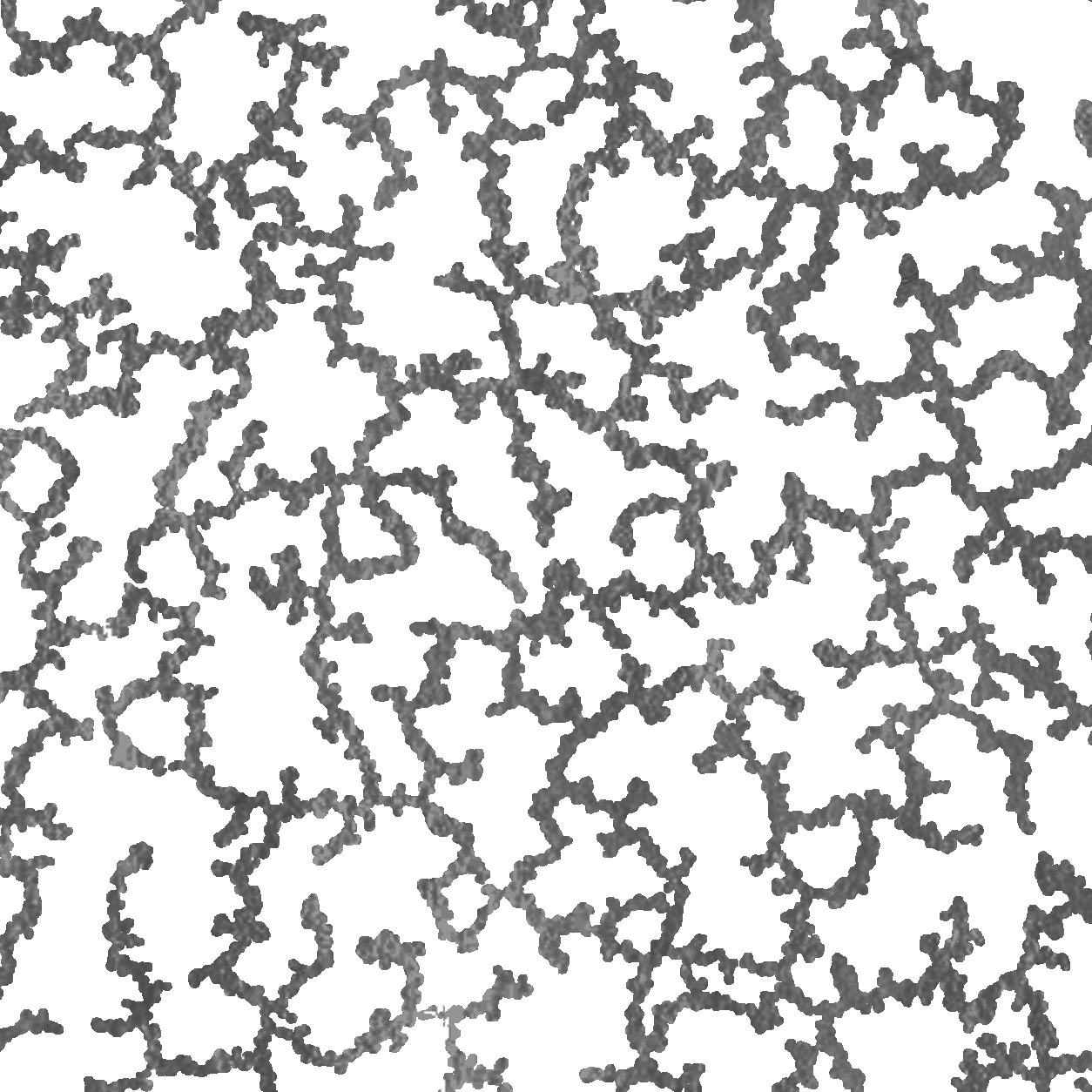
Above is a drawing from that looks at aggregation the characteristic of liquid particulates clustering on the surface.

According  to the early Greek philospher Empedocoles all the change and movement in the universe, including all the processes of creation and destruction, stem ultimately from two great principles of attraction and repulsion.1

Retifrom, net like formations, found in the insect world as optimal forms that can act as camouflage.


Patterns left by dried out paints and gels. The formations resemble the earths tectonic structure and street layouts.

The removal of water by evaporation causes materials to shrink and crack. Above hairline cracks on the glaze used on pottery.

Rivas, water drainage, or 'liquid channeling complexes', circulatory systems of animals and plants. 

Rivers shape the landscape and the landscape contains the river.

Li are essentially dynamic formations, and as such can give the impression of a frozen moment, of a process caught at a particular instant of time, or, in a more abstract sense, of the principle of energy engaging with that form. 

Quotes from Li, David Wade, Wooden Books.

Sunday, 26 September 2010

A Tidal Story


The tide erodes our infrastructures, a story of decay and change.

West Pier, Brighton 2009.

Tidal Rhythms

The gravitational forces exerted by our Moon, Sun and the rotation of the Earth create a constant changing landscape where water meets rock. The mapping of tidal movements can take many interesting forms. Our infrastructures and environments are constantly marked by this celestial condition. From high to low tide our thresholds are eroded, destroyed, flooded, scattered with debris and marked with the stories of our physical world. The passing of time is seen as the water oscillates on the coasts and banks of our habitats. Our architectures have the ability to have ever changing dialogues with the environment and with our universe.

NASA/GSFC - M2 Tidal constituent, Amplitude is indicated by colour. Mapping of global tidal movements.

Thursday, 2 September 2010

Message In the Waves

This is a powerful BBC documentary that highlights the issue of the deterioration of our oceans. Plastics are a huge issue and sea life is being choked by the shear volume of waste that is discarded every year into our oceans. Plastic is degraded by the sun into small particles similar in size to plankton, which sea life ecosystems are mistaking for food causing devastating affects.