My thesis looks to re-connect urban communities with their natural water systems. Through analysis of their beach infrastructures a rehabilitating design strategy will be used to help forge a new identity and help create a cohesive community. The benifits of tourism and the neccessity localism will shape a design approach that looks to sustain a vibrant sustainable community. The powerful rhythms of our natural contexts can be used to generate an appropriate architectural language to suite this ambition.
Showing posts with label Emulsion. Show all posts
Showing posts with label Emulsion. Show all posts
Sunday, 23 January 2011
Saturday, 11 December 2010
Emulsifying Path 경로
Boundaries are blurred between the formal orthogonal structure of the APT complex and the low rise housing to the north by introducing a path that weaves its way through the apartment blocks and underground car-park. The proposal sets out a connecting strategy by utlising contrasting character, form and material, blending the dislocated communities and landscapes. The path becomes a street with community activities. As part of this detail study the path divides and allows a cinema to be located at this juncture. The activity becomes an emulsifying intervention helping to forge links between the residents in the area.


Friday, 10 December 2010


Thursday, 9 December 2010
Li, Dynamic Form in Nature 리, 자연의 동적 양식
An earlier post titled 'Movement in x,y, and z' the drawings illustrated the informal layout of Seoul's streets, stairs and paths in its low rise areas. This has led me to look at forms that occur in nature. A book in the wooden series called 'Li, Dynamic Form in Nature' by David Wade, has been a favorite of mine for a long time. Li a Chinese notion of 'pattern' and 'principle' is used describe universal formations. Many of the drawings show naturally occurring networks and patterns in flora and fauna. Some of these forms resemble the street layouts studied, this has led me to reassess the plan layout and flow of the promenade. The inspiring maps of the complexity of our natural world are shown in this post. I'm interested in how informal natural patterns can contrast the formal layout of the complex. Looking at microscopic forms allows scale changes to be envisioned and contemplated. Arteries and branches become streets and paths. They all have a clear function, as a movement supporting structure. The promenade is the structure to allow flow and movement through the barriers and boundaries highlighted.

 Retifrom, net like formations, found in the insect world as optimal forms that can act as camouflage.


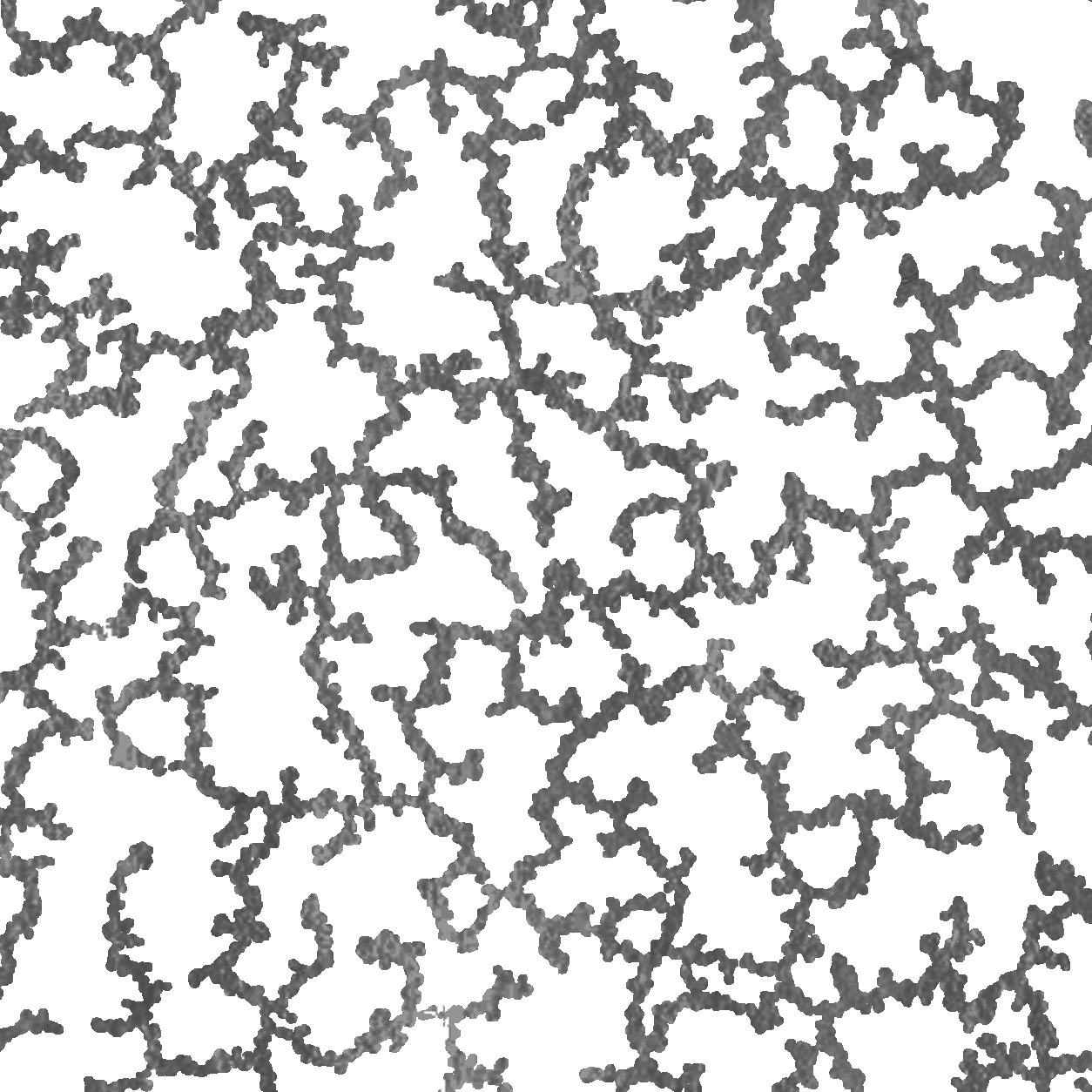
Above is a drawing from that looks at aggregation the characteristic of liquid particulates clustering on the surface.
According to the early Greek philospher Empedocoles all the change and movement in the universe, including all the processes of creation and destruction, stem ultimately from two great principles of attraction and repulsion.1
 Retifrom, net like formations, found in the insect world as optimal forms that can act as camouflage.
Patterns left by dried out paints and gels. The formations resemble the earths tectonic structure and street layouts.

The removal of water by evaporation causes materials to shrink and crack. Above hairline cracks on the glaze used on pottery.

Rivas, water drainage, or 'liquid channeling complexes', circulatory systems of animals and plants.
Rivers shape the landscape and the landscape contains the river.
Li are essentially dynamic formations, and as such can give the impression of a frozen moment, of a process caught at a particular instant of time, or, in a more abstract sense, of the principle of energy engaging with that form.
Quotes from Li, David Wade, Wooden Books.
Monday, 6 December 2010
emulsion |iˈməl sh ən|
emulsion |iˈməl sh ən|nouna fine dispersion of minute droplets of one liquid in another in which it is not soluble or miscible.ORIGIN early 17th cent. (denoting a milky liquid made by crushing almonds in water): from modern Latin emulsio(n-), from the verbemulgere ‘milk out,’ from e- (variant of ex-) ‘out’ + mulgere ‘tomilk.’
 The humble brick, each one unique and each one with a story. They are the emulsifying droplets for the promenade proposal. Koreans create a wide variety of bricks, glazed, burnt, patterned and organic. Bricks will form the rainscreen for my intervention when necessary. The wall of rainscreen can play with this variety of form, texture and pattern to create a sort of condensation affect. An interesting avenue of contemplation is Brick and Concrete the materials that makeup the structure of the low rise housing areas begin life as fluids. I have found a precedent in the centre of the shopping area of Insadong utlilises brick to create a flowing wall with a rhythm and animation. The images are of the north wall of Ssangil Market.


Subscribe to:
Posts (Atom)