Conservative predictions for sea level rise due to the melting of the arctic ice cap are for around 7ft by 2100.
Showing posts with label Water. Show all posts
Friday, 11 February 2011
Friday, 10 December 2010
Thursday, 9 December 2010
Li, Dynamic Form in Nature 리, 자연의 동적 양식
An earlier post titled 'Movement in x,y, and z' the drawings illustrated the informal layout of Seoul's streets, stairs and paths in its low rise areas. This has led me to look at forms that occur in nature. A book in the wooden series called 'Li, Dynamic Form in Nature' by David Wade, has been a favorite of mine for a long time. Li a Chinese notion of 'pattern' and 'principle' is used describe universal formations. Many of the drawings show naturally occurring networks and patterns in flora and fauna. Some of these forms resemble the street layouts studied, this has led me to reassess the plan layout and flow of the promenade. The inspiring maps of the complexity of our natural world are shown in this post. I'm interested in how informal natural patterns can contrast the formal layout of the complex. Looking at microscopic forms allows scale changes to be envisioned and contemplated. Arteries and branches become streets and paths. They all have a clear function, as a movement supporting structure. The promenade is the structure to allow flow and movement through the barriers and boundaries highlighted.
Retifrom, net like formations, found in the insect world as optimal forms that can act as camouflage.
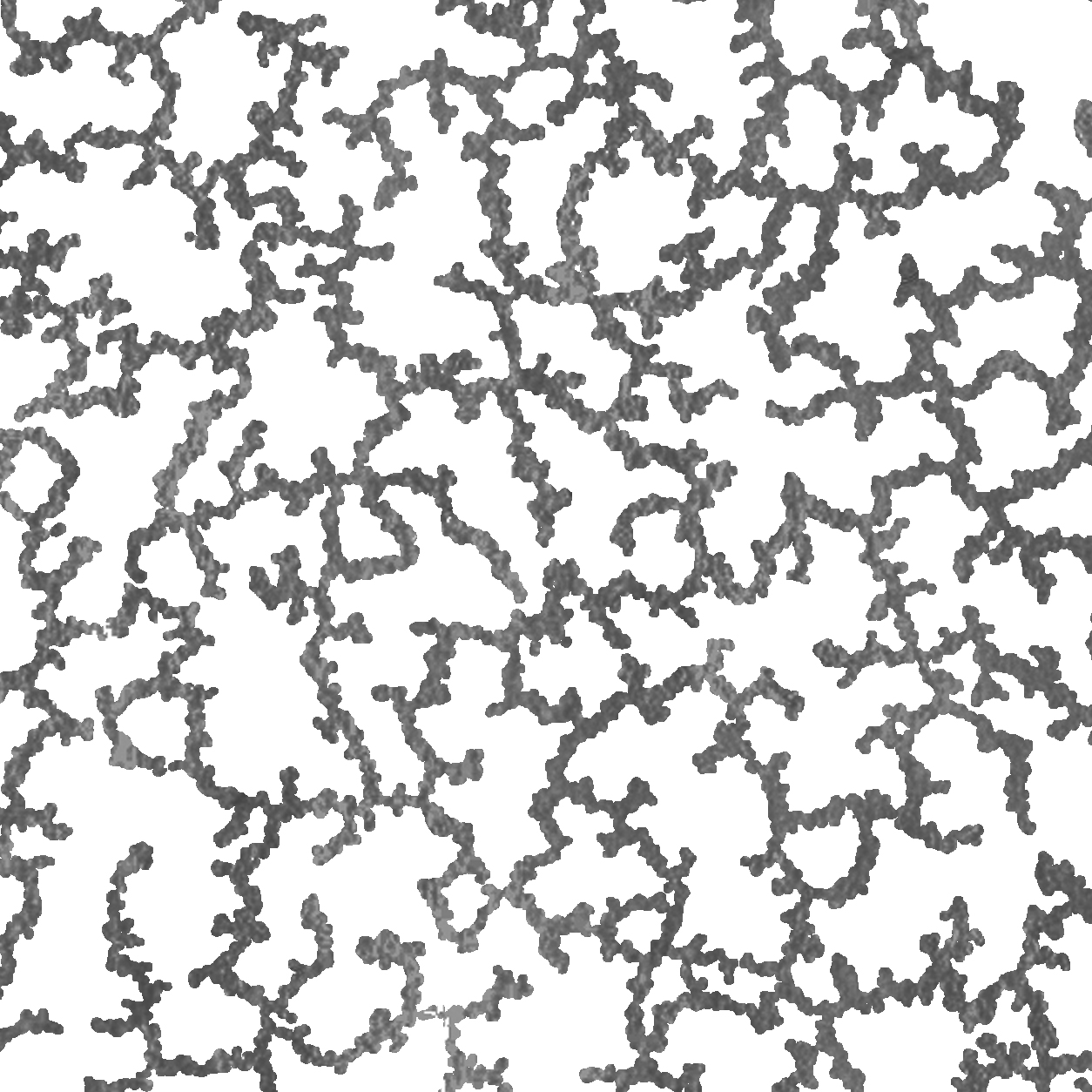
Above is a drawing from that looks at aggregation the characteristic of liquid particulates clustering on the surface.
According to the early Greek philospher Empedocoles all the change and movement in the universe, including all the processes of creation and destruction, stem ultimately from two great principles of attraction and repulsion.1
Retifrom, net like formations, found in the insect world as optimal forms that can act as camouflage.Patterns left by dried out paints and gels. The formations resemble the earths tectonic structure and street layouts.
The removal of water by evaporation causes materials to shrink and crack. Above hairline cracks on the glaze used on pottery.
Rivas, water drainage, or 'liquid channeling complexes', circulatory systems of animals and plants.
Rivers shape the landscape and the landscape contains the river.
Li are essentially dynamic formations, and as such can give the impression of a frozen moment, of a process caught at a particular instant of time, or, in a more abstract sense, of the principle of energy engaging with that form.
Quotes from Li, David Wade, Wooden Books.
Sunday, 5 December 2010
Site Model_1:500
Below are some images of a site model that I made last week. I am determined to get in my suitcase when I return in two weeks. Partly in section the model shows the underground spaces for car parking. Massing exercises are to follow which hope to explore the physical notion of connecting through emulsifying.
Labels:
Apatu,
Dislocation,
Heukseok,
Infrastructure,
Landscape,
Model,
River,
Seoul,
Water,
서울
Tuesday, 30 November 2010
Water Infrastructures 워터 인프라
Tuesday, 23 November 2010
Blending the Beach Boundary
Bognor Regis town centre. A photo collage that plays with the idea of blending the boundaries between the beach and the urban fabric.
A Strategy 전략
Reconnecting the the river to the city is the aim for my gift project. Ideas are explored in a couple of drawings below. The apatu complexes and the steep retaining wall infrastructure obstruct views and connections to the waters edge. Blending the materiality and character of the traditional housing area across the boundaries created by the road, the apartment complex and topography conceptually opens up ideas. A flow of small red brick houses have journeyed to the waters edge traveling straight through the complex. A section reveals a number of locations where physical connections are needed and where the flow is obstructed.
A STRATEGY
To Blend
To Bleed
To Break through
To View
To Emulsify
TO RECONNECT the city to its river
A number of obstructing boundaries or edges exist and are illustrated with a yellow square on the drawing below. They are all potential sites for an intervention. Boundary 1 and 2 show the possibility of an elevated connection via an existing pedestrian bridge, which breaks through the Apatu block at 3rd floor. The third boundary looks to create a connection across the retaining wall of the car park. A subterranean world exists under the complex which is refered to as 'The Rabbit Hole' by Seoulites. The darker areas represent the idea of creating a inhabited links under ground using the carparks as tunnels. Boundary 5 is where the city meets the waters edge. Developing a program or activity at this point that allows the complex community and the Hangang park community to share would create a successful reconnection between the city fabric and the rivers edge.
Friday, 19 November 2010
Beaches+Cities+Dislocations 해변 + 도시 + 전위
The time has come for me to distill my research allowing a clear strategic direction to emerge. I have discovered the Jimjilbang, which are to me purifying spaces embeded in the culture and urban fabric of Seoul. What I am currently concentrating on in preparation for my gift project is a strategy of looking for physical dislocations within the city.
The Cheonggycheon stream project is an example where the city has rediscovered a natural, historical enitity deep within the city centre. This infrastructural beach provides connections between pure and unpure parts of the city. Similary the Han was cruelly disconnected from the city and I will return to the Park to search out a site that illustrates an abrupt dislocation. Butlin's has long been an isolated 'city' within the town, a self contained community. Permeating Butlins' hard barrier will create a connection with the town. The potential of the southern boundary shared with the promenade has been neglected by the resort. Its metal spiked fence implies a negative relationship with the beach and the town. An interesting way of dealing with Butlins' dislocation could be to treat it as a city.
Seoul has reconnected with its Rivers through physical connections such as bridges, lifts and tunnels. The park is the length of the river, which in turn becomes the length of the city. The same spatial relationship happens in Bognor where the promenade is a public space the length of the town. My goal is to discover a dislocated site that informs a method of reforming a connection. Possible strategies may become paths, physical interventions or the framing of views. In Bognor my strategy is to reveal the beach to the town, a method of enacting a flow that blends the two extremes.
The Cheonggycheon stream project is an example where the city has rediscovered a natural, historical enitity deep within the city centre. This infrastructural beach provides connections between pure and unpure parts of the city. Similary the Han was cruelly disconnected from the city and I will return to the Park to search out a site that illustrates an abrupt dislocation. Butlin's has long been an isolated 'city' within the town, a self contained community. Permeating Butlins' hard barrier will create a connection with the town. The potential of the southern boundary shared with the promenade has been neglected by the resort. Its metal spiked fence implies a negative relationship with the beach and the town. An interesting way of dealing with Butlins' dislocation could be to treat it as a city.
![]() |
| Photomontage of the Cheonggycheon Stream project. The urban dislocation is now a memory. |
Thursday, 4 November 2010
Busan Beaches 부산 해변
I managed to escape Seoul for the weekend and venture to Busan a Korea's second city on the coast. This post shows my sketch study of the Haeundae Beach, it really was the Copacabana of Korea. You swim fully clothed on these beaches though. It had a typically seaside feel about the place with run down buildings and the smell of fish markets. The city escaped density by adopting the sandy beaches as a public space. Strictly no smoking!
Tuesday, 2 November 2010
Undressing the Jimjilbang 목욕탕 옷을 벗기는
From my memory I have redrawn the spatial layouts of the Jimjilbang's that I've visited so far. These drawings should be developed to include material and atmospheric qualities. They are certainly missing some naked Korean men. As a follow up to redrawing the wet spaces contained within the Jimjilbang I drew the sections that correspond to many of the spaces illustrated in the plans. By overlaying the drawing on the cityscape I'm trying to show the embedded nature of these contained spaces in the city's urban fabric. The Photograph represents the incredible opportunity that a view could offer, a connection to the city and the provision of a reference point for contemplation.
Labels:
Baths,
Jimjilbang,
Seoul,
Water,
서울
Wednesday, 27 October 2010
The Weird World of Wolmi-Do 의 이상한 세계
I discovered a place that resembled some of the cheap and cheerful fancies that can be enjoyed at many seaside resorts globally. Once a romantic escape from Seoul for courting couples, the Island of Wolmi has become a promenade for mass entertainment at a hysterical pace.
I found the experience overwhelming after a couple of hours. Intense screaming and fishy food odors filled the air, which was enough to turn even my strong stomach. It was a gray Saturday afternoon and people ventured here en masse. Sandwiched between the huge seaports and industry of Incheon, it was a surprising break in the harrowing landscape of infrastructures of imports and exports. It seemed Coney Island had arrived on a ship.
I presented some photos of this experience and some key questions arose, which interestingly surrounded the cultural differences between my views and that of people who enjoy this orgy. Why do people enjoy this so much? Does everyone in Seoul love this type of excursion? Why do I find this juxtaposition on the waterfront somewhat uncomfortable? The views of the Sea were stunning and on a gray day it could've have been Bognor. The activity was frenzied and led to thoughts on how this was a seasonal place. It must suffer from some of the same issues as British resorts with the need to shut up shop for winter months.
Its relationship to the water front reminded me of the typical British need to have a convoluted journey to the water accompanied with an alcoholic drink and some diverting entertainments along the way. There is a pursuit of pleasure in such a place but not in a romantic manner. The artificial landscape of distractions mirrors that of the consumer’s need in shopping malls for material objects. It is surreal and as Travis Elborough describes in such situations 'theres a giddying sense that the time-honored distinctions between the sea and the land have come unstuck some how'.
Friday, 22 October 2010
Dragon Hill Jimjilbang 드래곤 힐 스파
A new cultural phenomenon, Jimjilbang's have taken off in past decade are surreal place to relax, socialise and have a snooze. Dragon Hill is an elaborately themed bath house taking motifs from all around the world and throwing them together in a tower. I'd seen some images before arriving and I was intrigued to see whether they were manifestations from a underlying cultural relationship with water. This was my first adventure into naked bathing with many men. A spiritual atmosphere was missing that I would normally associate with a bath house typology. There was not much there that I could associate with traditional Korean culture. Igloos, american Indians and Terrier dog water fountains were some of the most bizarre items. The price is great 12,000 won (£7) for twelve hours, I can see why citizens have adopted them as the best way to relax after the exhausting hours they put in at the work place. There was clearly a very unnerving aspect to the spaces and they were not calming, the smell of nail parlors, food counters and people smoking in the changing rooms meant a that I left feeling a little abused.
Wednesday, 20 October 2010
3| Infrastructural Edges
A work in progress, my aim is to look patterns and layering that become defined by the transport infrastructures at the river Han's water front. The section below is a quick look at the Hangang Park space and flood zone and looking at the ways the rivers water connects to the landscape, city and its citizens at this threshold.
2| A Unique Condition 고유 조건
The edge condition as I described in an earlier post is unique in many ways. In many other cultures spaces below and close to vast transport infrastructure are usually intimidating. The Han Renaissance is successful only due to the cultural mindset of Seoul's citizens. I feel that Korean culture is guided on solid moral principles in which respect of each other and the public realm enables the spaces at the rivers edge to be inhabited positively. I carried out a photographic study of an area close to Oksu subway station. I find this part of Seoul fascinating and the photos below try to study peoples activities, infrastructural connections, spatial characteristics and water relationships at first glance.
Fishing with filligree rods a place of escape and contemplation with the city left behind above.
Quiet place for a Korean siesta.
Infrastructure soars above shading the spaces below, see if you can spot the guy. The table of photos below look at four areas of interest, Activity on the bank, activity at the rivers edge, infrastructure that helps define the space and the assortment of views and perspectives across the river and the city.
Monday, 18 October 2010
The Host 괴물
'Monster' A Korean classic horror film (Director Bong joon-ju) set on the Han River depicts a creature terrorising and inhabiting the dark bleak spaces of the city's underworld at the rivers edge. The architecture is inhuman and menacing and the director has clearly used the infrastructure to explore the unknown and underused spaces of the city. The Han Renaissance project has allowed these spaces to be revitalised and tamed and as outlined before helped it become a successful city park. It seems that the citizens perceive the rivers edge as a feared no longer. Below are series of stills from the film that illustrate the dark infrastructural spaces explored by the director.
1| Hangang City Park 하천 도시 공원
Our first day in Seoul began with a cycle ride along the Hangang (River). A huge entity that powers through the city. The edge condition is mind blowing... transport infrastructure passes along the bank and is pierced every now and then by the sweeping bridges. The monolithic character speaks of a cold and brutal urban reality, but the Han Renaissance project has worked wonders with the sheltered spaces below providing a park the length of the city. Planting, outdoor gyms, cycle and hiking lanes create a complex space where the citizens can escape. The Hangang park is an underworld with the noise, pollution and congestion left elevated above. A strange utilitarian beauty is embodied in the concrete forms and provide a tectonic ensemble of vertical columns and sweeping horizontal platforms. A calmness has been created in these spaces through planting which helps soften the menacing infrastructure.
Bike rental was 'service', which was the stewards way of saying free, this meant that anyone could enjoy the entire rivers edge. We cycled a few kilometres in 3 hours coming across many activities, which included fishing, sailing, power walking, basketball, amphitheaters of varying sizes, badminton courts, picnic zones demarcated on the concrete floor, gym machines, volleyball courts and football pitches. River activities were prevalent, with people wind-surfing, sailing and catching small water ferries, which embark from a floating station. The park also included a boat yard where pleasure craft and fishing boats were stored. The amount of activity surprised and excited me, as it showed that the river is beginning to be loved and enjoyed. The renaissance project has created a unique environment a park the length of the city, which the citizens are taking full advantage of.
![]() |
| The Han River Renaissance Project (Source: Seoul Met Gov, 2008a, 57,93) 'The Han River now belongs largely to the Republic of Korea, or South Korea, with its effluence in the Yellow Sea a few nautical miles from North Korea (though some of the river's tributaries are in North Korea). During the first few decades of South Korea's existence the Han River became a byword for pollution, as burgeoning industry and an impoverished populace used it as a convenient spillway for industrial and urban refuse. Though it no longer plays a central role in commerce or transportation it is a prime fixture in the life of the South Korean capital and in the last decade has become the focus of government sponsored environmental efforts to clean it up and transform it into an ecological jewel of the capital. During the 1988 Summer Olympics in Seoul, the Han River was the site of the Olympic rowing regatta.' (http://en.wikipedia.org/wiki/Han_River_(Korea) |
The World Is Not Enough
With my journey now underway I would like to talk about my Dubai experience. This city and it's culture should be so different and unrecognizable in so many ways and some parts are, but unfortunately the huge malls and skyscrapers that are so dominant are good examples of 'non-places' of our supermodern society (Marc Auge). The 'Old areas Bastakiah and Diera resembled a traditional city with their narrow streets and small souks (markets). But an overwhelming sense of sameness and banality was felt in the new areas. It is clear a rich culture can be diluted by the perils of being a global destination. The array of malls all sporting the same global brands was expected and hit home the gaudy and sickly state of our capitalist appetite for consuming. Dubai has with its linear character monopolised the excess of space by building along the coast, but why go so high with so much land? I wondered what forces are at play with regard to density or land prices? And I have to admit it just left me baffled, which means I have to take it for what it is 'a playground vision being fulfilled'. A strange ugliness pervades a place built on money and not on the personal needs and relationships of its citizens.
Dubai has a strained relationship with water and is a good example of a dislocated society. Water is used extensively as a method of passively cooling exterior spaces and this is a harmonious and historic technique. But when a city survives solely by the energy intense method of desalinating seawater and air conditioning spaces to keep the city functioning, it does beg the question, is this extremely short sighted in the current global environmental climate? I was surprised by the amount of green planting and wondered how much water it must take to keep the city artificially and aesthetically pleasing. This need to perform becomes most evident with the 'Burj Khallifa' water show that takes place every evening at the foot of the 830m high worlds tallest building. It was incredible and all I could ask myself was how much? and at what cost?
The city's coast with the sea breeze and cooling ocean is an Oasis, but has been pillaged by private owners. The land mass is not enough and new formations are being created off the coast, with new beaches and Islands sculpted into mad desires. Land reclamation has its ecological issues and the flows and movement of stagnating water is a key problem. Acting God and creating a 'New World', and the 'Universe' highlight the superficiality of the place. I was intrigued to notice a lake of development on these creations. The World was desolate, no sign of any civilisation, has the global financial crisis doomed this dream. It's fascinating to contemplate the scale of engineering achievements that have taken place in this one city, but I find the quality and thoughtfulness of the designs somewhat doesn't match. The city visually entertains on all the scales and that is a interesting point of departure for the rest of my research. I will return to see if this architectural disneyland will survive or adapt to the strains not to far away.
An article titled the 'The Mad Experiment' succinctly talks about some of the above issues:
http://www.newsweek.com/2008/06/28/the-mad-experiment.html
Non-Places: Introduction to an Anthropology of Supermodernity (1995), Marc Auge
Subscribe to:
Posts (Atom)